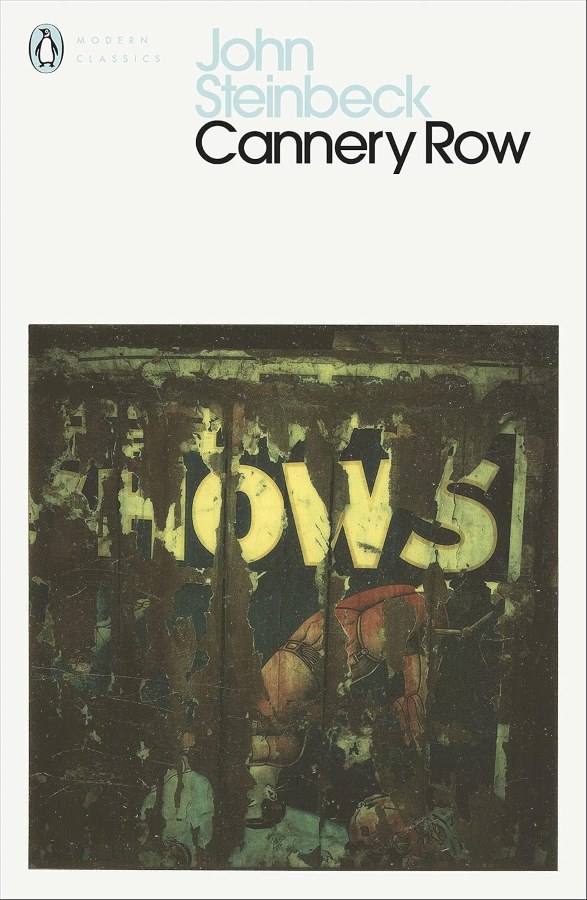
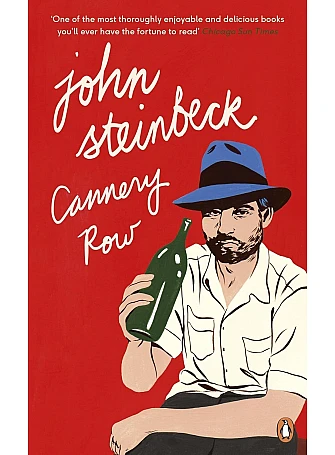
A Depression era portrait of people living in an area near a sardine fishery in Monterey, CA known as Cannery Row.
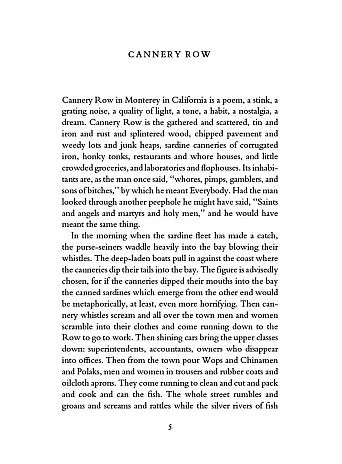
From the opening of the novel: "Cannery Row in Monterey in California is a poem, a stink, a grating noise, a quality of light, a tone, a habit, a nostalgia, a dream. Cannery Row is the gathered and scattered, tin and iron and rust and splintered wood, chipped pavement and weedy lots and junk heaps, sardine canneries of corrugated iron, honky tonks, restaurants and whore houses, and little crowded groceries, and laboratories and flophouses. Its inhabitants are, as the man once said, 'whores, pimps, gamblers and sons of bitches,' by which he meant Everybody. Had the man looked through another peephole he might have said, 'Saints and angels and martyrs and holy men,' and he would have meant the same thing."
In the din and stink that is Cannery Row a colourful blend of misfits - gamblers, whores, drunks, bums, and artists - survive side by side in a jumble of adventure and mischief. Lee Chong, the astute owner of the fantastically well-stocked grocery store, is also the propriator of the Palace Flophouse that Mack and his troupe of good-natured 'boys' call home. Dora, of the flaming orange hair and taste for Nile green dresses, runs the brothel with clockwork efficiency. Doc, who owns the laboratory, is the fount of all generosity and wisdom. Everybody wants to do something nice for Doc: the trouble is, he always ends up paying.
Packed with invention and joie de vivre, Cannery Row is Steinbeck's high-spirited tribute to his native California.